







Ante
Alpha preview: expect breaking changes and incomplete functionality. macOS and Linux only; on Windows we suggest WSL.
Read this first
Two things many people ask about:
Where is the source? The core harness currently ships as a prebuilt binary; this repo holds the docs, protocol, SDK, and eval pipeline (details). We are working out a way to ship the source code along with the binary, to address security and privacy concerns first, while taking the time to figure out how open source should work in the agentic era. Progress and discussion: issue #21. If you have concerns today, run Ante in a sandbox: it is a single self-contained binary, built to be easy to deploy in a container or on a remote machine.
Is there telemetry? Yes, and it is opt-out: set ANTE_TELEMETRY=off to disable export entirely. What it sends is anonymous — a random installation label you can delete and re-mint, never your username, hostname, or machine id. The RUST_LOG filter also applies to exported logs, a convenience carried over from the Rust ecosystem. A better UX is in the works. Details →
A ghost in your shell. Ante is a self-contained coding agent that lives in your terminal and self-organizes. One ~15MB compressed download from Antigma Labs that expands to a single Rust executable with zero runtime dependencies, built to get the most out of any model.
It works like Claude Code or Codex, with none of their dependencies or model constraints. It can also be the optimized core for building your own harness and high-performing assistants.
curl -fsSL https://ante.run/install.sh | bash
ante
One harness to run them all
We care about the harness, not a co-trained model or a secret prompt. The harness and the model are a dynamic duo: they should evolve together but not be bound together. Prompts belong to the user.
Ante makes this declarative: one settings profile can define the whole agent, replacement system prompt included.

Every agent claims to be good. Here are numbers you can check:
🥇 Continuously evaled and evolved, in public
We evaluate Ante as a harness across different model families instead of coupling it to one hero model. Ante runs Terminal-Bench 2.1 continuously under official leaderboard constraints: 89 tasks, 5 trials each. Each result pins the exact Ante build you can download and links the raw Harbor run for independent audit. Latest full run: 82.7% with open-weight DeepSeek V4 Flash 0731 (368/445 trials, Ante 0.preview.71, about $68 of inference). DeepSeek reports the same 82.7 for this model, measured with its unreleased DeepSeek Harness in minimal mode.
We also isolate the harness itself: in a controlled test using the same DeepSeek model slug, tasks, and sandbox across five harness configurations, Ante passed 10/10, Ante with its short prompt passed 9/10, and Pi, OpenCode, and Hermes each passed 7/10. Ten tasks are an early signal, not a definitive ranking, but they show that fixing the model does not fix the outcome.
Live cross-model results → · Same-model harness comparison → · Methodology →
🪶 A fraction of the footprint
Ante is hand-written Rust: the heavy parts (Grep, git) are embedded in one binary and one process, and local inference is handled by a managed llama.cpp. Across the same 20 parallel tasks in Docker, Ante uses ~7× less peak memory, ~9× less average CPU, and ~5× less disk I/O than Claude Code.
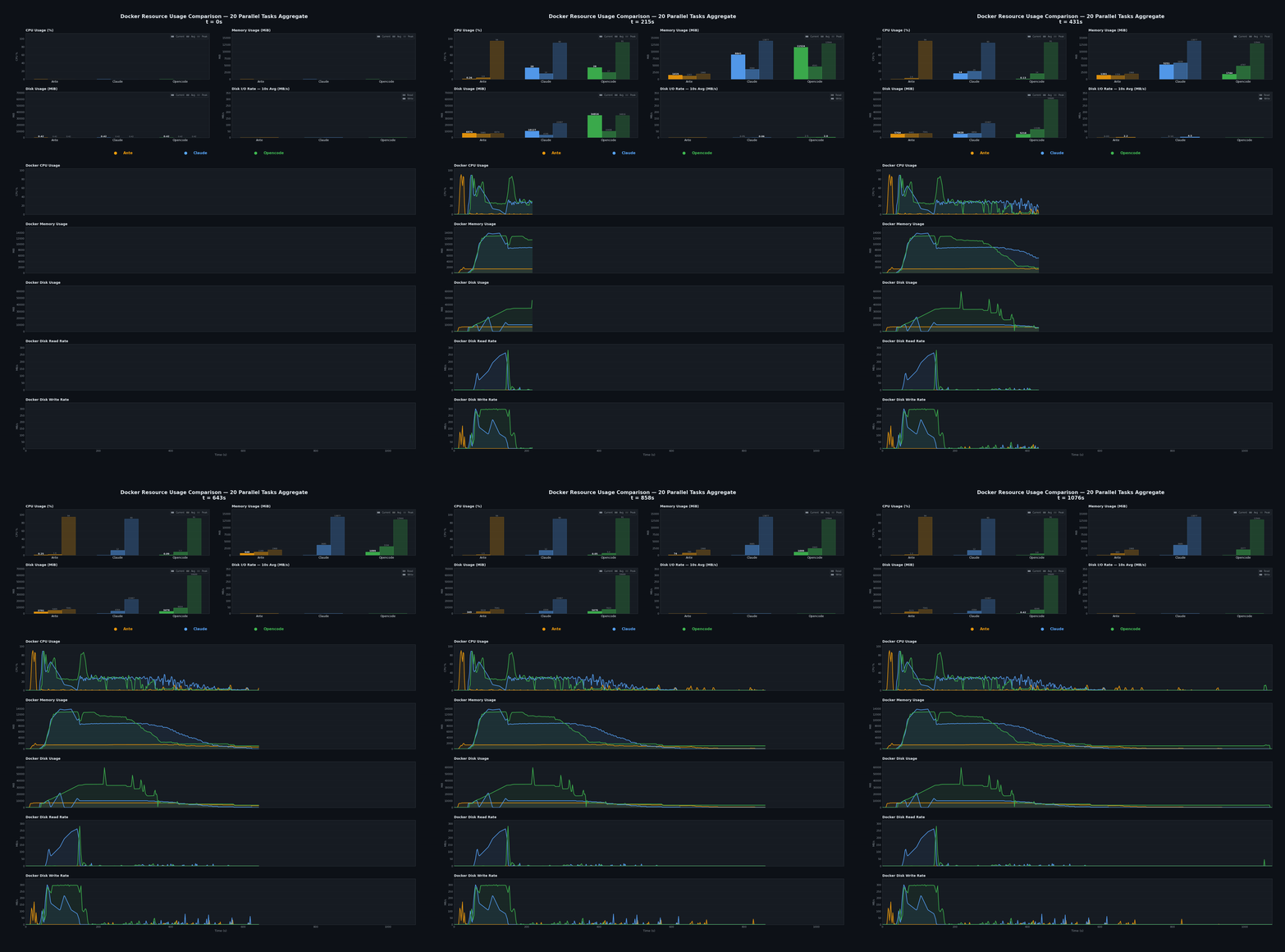
Raw numbers → · Benchmark details →
🔌 Natively offline
Ante's inference engine is a pinned, managed version of llama.cpp. Point it at a GGUF file and the whole loop runs on your machine: no API key, no account, no internet.
ante --offline-model ~/.ante/models/Qwen3.5-9B-Q4_K_M.gguf \
  -p "add error handling to src/main.rs"
We think about the engine layer in public too. nanochat-rs is a small GPT inference core we wrote in pure Rust on candle: readable, runnable, and living in the same process as the code that calls it. It is a study project rather than part of the binary, published because in-process inference is where local models get interesting for agents.
Offline mode → · nanochat-rs → · Where this is going →
These three properties are one design decision. An agent you can verify, afford, and run anywhere is light enough to run by the thousands: the substrate for self-organizing intelligence.
See it in action
|
|
Providing Context: Files & Folders
|
|
|
|
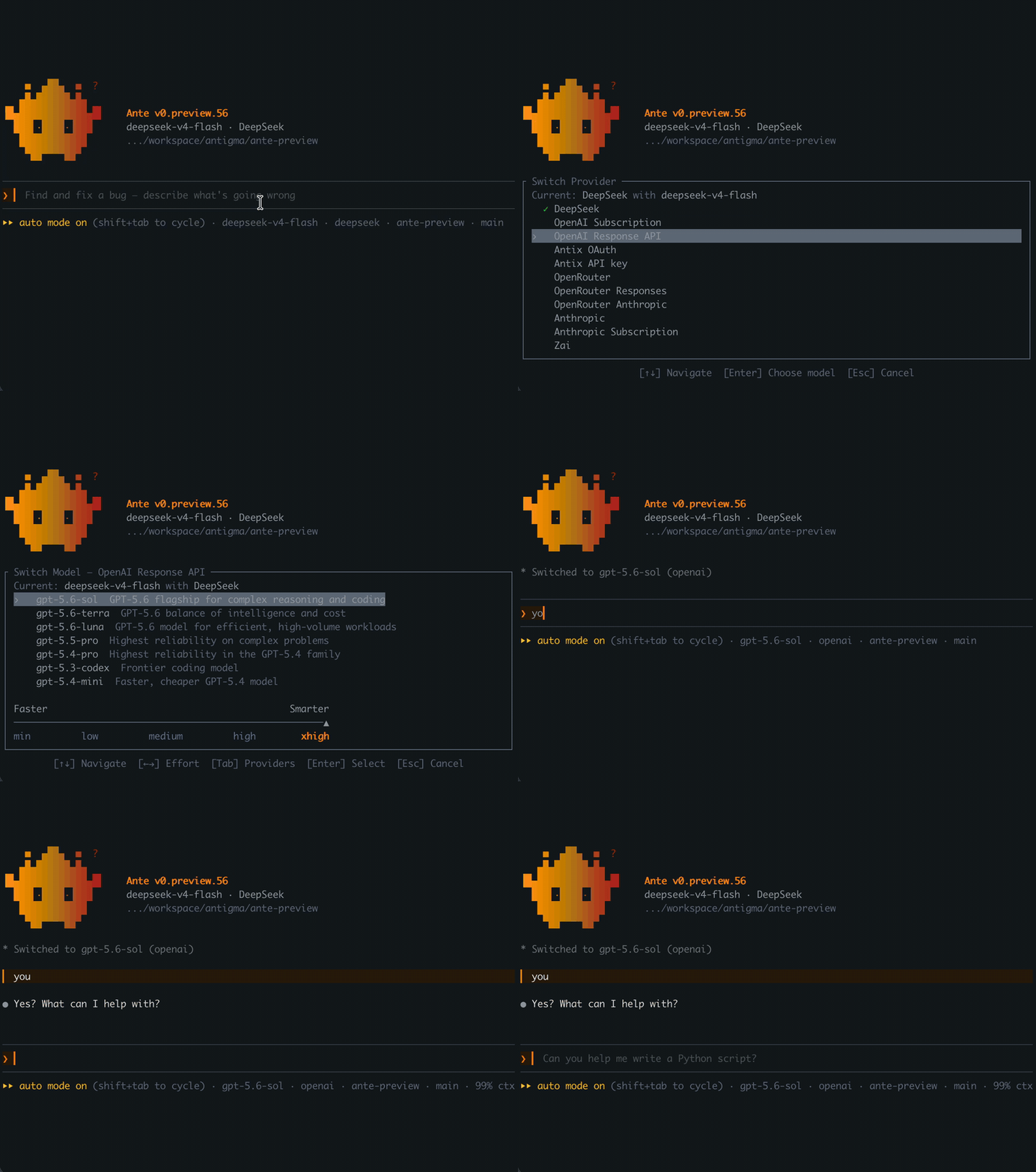
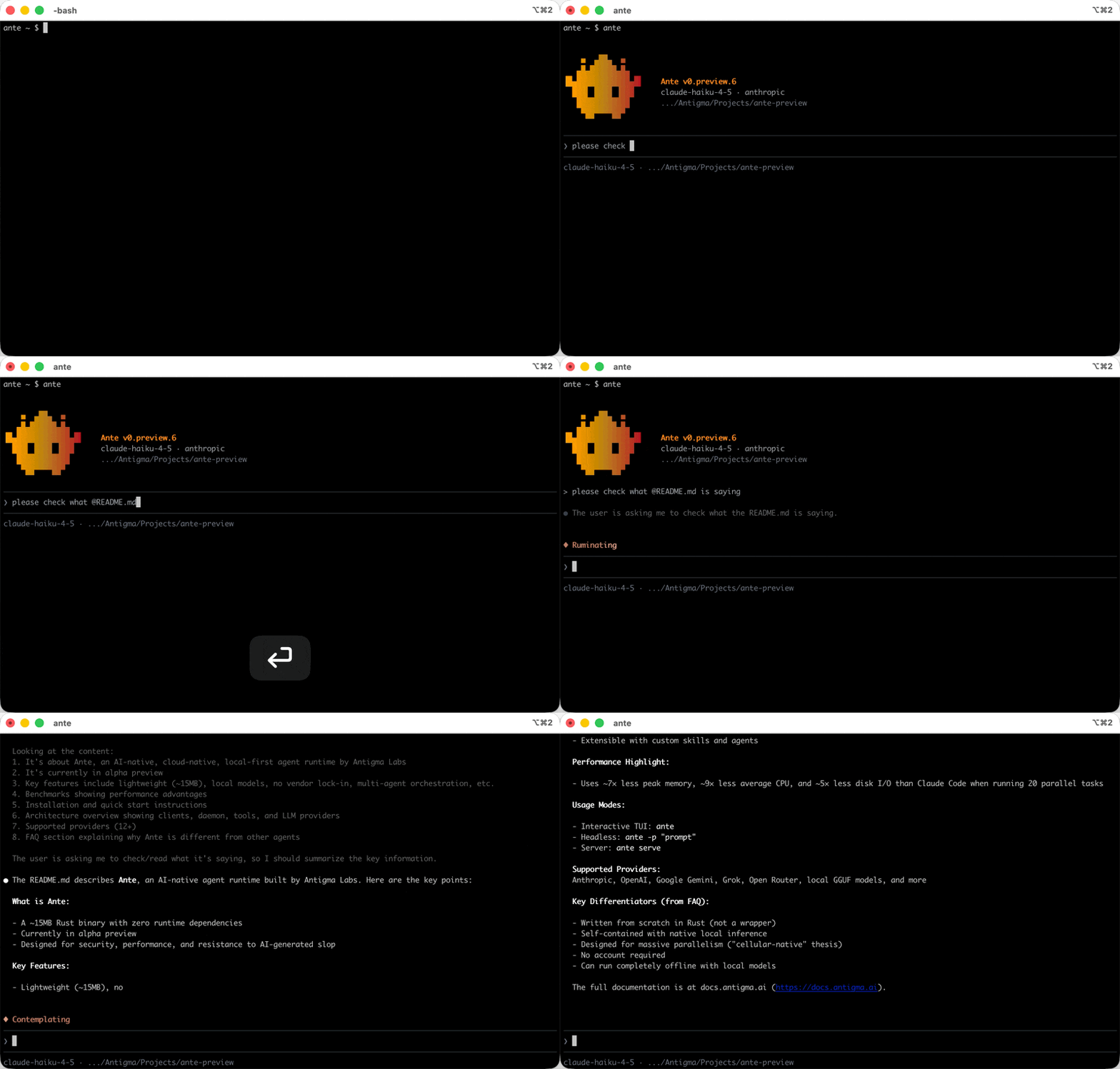
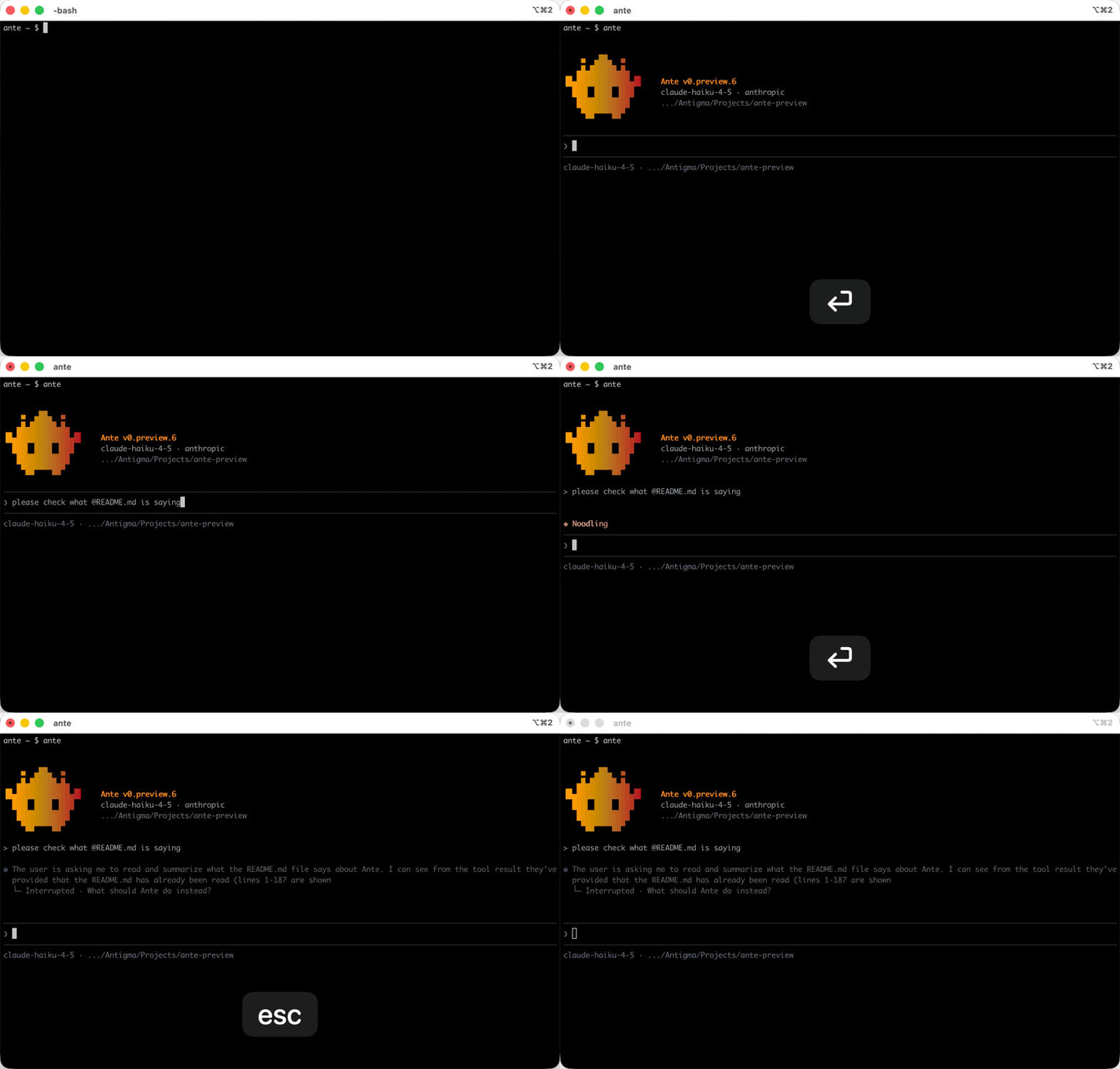
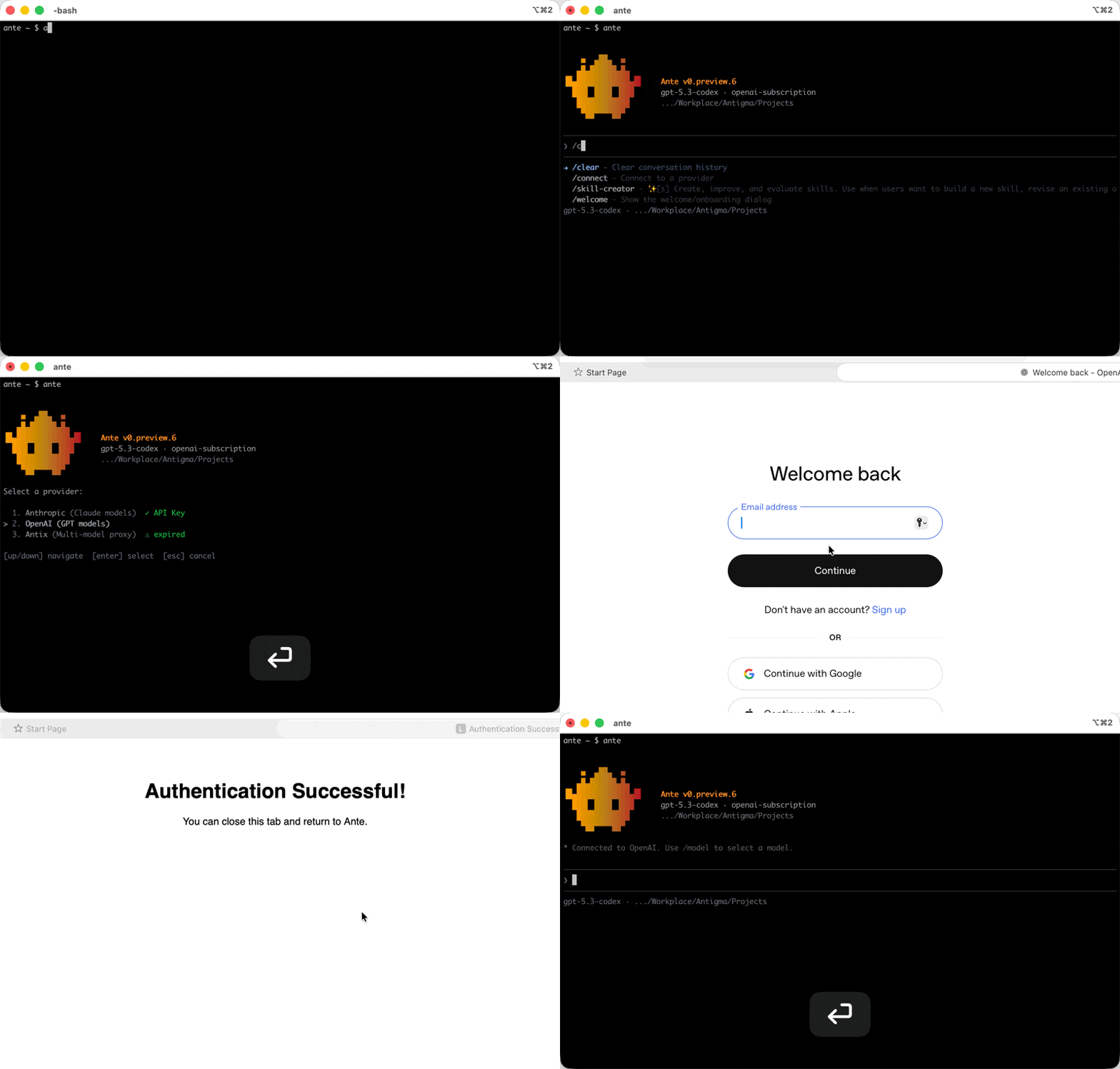
Quick Start
Installation
Ante is a single, self-contained binary with no external dependencies: download and run.
curl -fsSL https://ante.run/install.sh | bash

# Install a specific release channel
curl -fsSL https://ante.run/install.sh | bash -s -- nightly

# Install into a directory already on PATH
curl -fsSL https://ante.run/install.sh | ANTE_INSTALL_DIR=/usr/local/bin bash
Modes
| Mode | Command | Use it for |
|---|---|---|
| Interactive TUI | ante | day-to-day work in the terminal |
| Headless | ante -p "..." | one-shot tasks, scripts, CI |
| Server | ante serve | editor plugins and integrations, over a JSONL protocol |
| Gateway | ante gateway | running Ante as a Slack or Discord bot |
Headless examples
# Fix a bug
ante -p "find and fix the failing test in src/auth"

# Review a diff
git diff | ante -p "review this for security issues"

# Use a different provider
ante --provider openai --model gpt-5.5 -p "refactor the database module"

# Resume a saved session
ante --resume ses_01ARZ3NDEKTSV4RRFFQ69G5FAV -p "now add tests"

# Run fully offline with a local GGUF model
ante --offline-model ~/.ante/models/Qwen3.5-9B-Q4_K_M.gguf \
  -p "add error handling to src/main.rs"
Update Ante
ante update

# One-off update from a different channel
ante update --channel nightly

# Roll back or pin to an exact release
ante update --version v0.preview.81
One binary, many agents
Ante's behavior lives in a settings file, and --profile <name> swaps that file per run: system prompt, tool set, skills, memory. The same binary can be a full assistant in one terminal and a minimal agent in the next.
The curated pi profile is the extreme case. It strips Ante down to four tools (Read, Write, Edit, Bash) and one short replacement system prompt; file search runs through rg, subagents through ante -p "<task>", web access through curl. The whole agent fits in one JSON file you can read in a minute:
cp curated/pi.settings.json ~/.ante/
ante --profile pi
A profile replaces the whole settings file, so anything it omits falls back to Ante defaults, and explicit CLI flags still win. Ante also ships a built-in bare profile for stripped-down runs: no skills, MCP servers, session saving, or auto-memory. Share what you build in curated/.
Named profiles → · Curated profiles →
Supported Providers
Bring your own API key, subscription, or local model; no account required, not even with us. Provider support comes in two layers.
Built-in presets we maintain. 17 presets, each tested and kept current, so the per-provider quirks are already handled: wire dialect, API key and OAuth flows, thinking and streaming behavior.
| Provider | Example Models |
|---|---|
| Anthropic | Claude Sonnet 5, Opus 5, Fable 5 (API key or subscription OAuth) |
| OpenAI | GPT-5.6 family (API key or ChatGPT/Codex OAuth) |
| Google Gemini | Gemini 3.x family (Gemini API or Vertex AI) |
| Grok (xAI) | Grok 4.5 |
| DeepSeek | DeepSeek V4 |
| Open Router | Any Open Router model, over three wire styles |
| Local (GGUF) | Any GGUF model via built-in llama.cpp |
| ...and more | Zai, Ali Coding Plan, Antix, OpenAI-compatible |
A config layer for everything else. Your own proxy, gateway, or inference engine is one entry in ~/.ante/catalog.json: a wire_style (Ante speaks four API dialects), an auth style (bearer, header, or query, from an env var or OAuth), plus http_headers and extra_body for whatever else the endpoint expects. The combinations cover most setups without a plugin or a code change:
{
  "providers": {
    "my-gateway": {
      "base_url": "https://gateway.example.com/v1",
      "wire_style": "OpenAiCompatible",
      "auth": { "bearer": { "env_key": "MY_GATEWAY_API_KEY" } },
      "http_headers": { "X-Org": "my-team" },
      "extra_body": { "service_tier": "priority" }
    }
  }
}
Providers guide → · Catalog Reference →
What's in this repo
Documentation is the new source code.
We open sourced what really matters in the age of agentic coding, all under Apache 2.0:
- Detailed documentation, the descriptive truth.
docs-site/is the source for docs.antigma.ai: a precise description of what the harness does and how to drive it. - The protocol, the algorithm of the core.
crates/protocol-shapedefines the schema and wire messages spoken byante serve;crates/agent-sdkis the Rust SDK and client for building against agent runtimes. - The eval pipeline, constraint and continuous improvement.
ante-harbor/is the Harbor agent adapter behind our Terminal-Bench results: use it to reproduce any run at antigma.ai/eval.CHANGELOG.mdrecords the improvement, release by release.
Alongside these, curated/ is a shared space for reusable pieces from the team and community, laid out to mirror ~/.ante/: settings profiles like pi, and skills.
The core harness itself is developed in a private repository during the alpha and ships as a prebuilt binary via releases. Core libraries from it are included here progressively as they stabilize; crates/exec, standalone process execution, is the first. Open-sourcing progress is tracked in issue #21.
The protocol surface maps to Ante's client-daemon architecture:
┌─────────────────────────────────────────────────────────────┐
│                         Clients                             │
│                                                             │
│   ┌───────────┐    ┌───────────┐    ┌────────────────────┐  │
│   │    TUI    │    │ Headless  │    │    ante serve      │  │
│   │  (ante)   │    │ (ante -p) │    │  (stdio / ws)      │  │
│   └─────┬─────┘    └─────┬─────┘    └─────────┬──────────┘  │
└─────────┼────────────────┼─────────────────────┼────────────┘
          │                │                     │
          ▼                ▼                     ▼
┌─────────────────────────────────────────────────────────────┐
│                         Daemon                              │
│                                                             │
│   Session ──▶ Turn ──▶ Step                                │
│                                                             │
│   ┌──────────┐  ┌──────────────┐  ┌───────────────────┐     │
│   │  Tools   │  │  Permission  │  │  Skills / Agents  │     │
│   └──────────┘  └──────────────┘  └───────────────────┘     │
└────────────────────────┬────────────────────────────────────┘
                         │
                         ▼
┌─────────────────────────────────────────────────────────────┐
│                     LLM Providers                           │
│                                                             │
│   Anthropic · OpenAI · Gemini · Grok · Open Router · Local  │
└─────────────────────────────────────────────────────────────┘
The bigger picture
Ante is designed for cellular-native agents: like cells in an organism, tiny, expendable, massively replicated. That thesis is why the three headline claims exist. A cell-scale agent must be verified (reliability compounds at scale), tiny (every byte is multiplied by thousands), and self-contained (no runtime to install, no service to phone home to). Read more in our philosophy and agent organization patterns.
FAQ
Why another terminal agent?
The name is the answer: Another Terminal agent, and ante, the stake you put on the table to play. Ante is fast, lightweight, and the only terminal agent with native local inference built in. We believe a self-contained agent core that self-organizes is the foundation of the coming agent economy.
How is Ante different from other agents?
Ante has most of the features you expect from agents like Claude Code or Codex: multi-agents, skills, MCP, persistent memory. The difference is the build philosophy.
- Built from scratch in Rust: one executable that downloads as ~15MB compressed and unpacks to 34.1 MiB (the figure our harness comparison tables report). Core components like
Grep(fully rebuilt and customized) andgitrun in the same process, so nothing is shelled out and no resources leak. Most similar projects ship on Node.js or CPython and carry an order-of-magnitude larger footprint. - Local inference is built in: a local GGUF model is all Ante needs to run without any provider.
- No vendor lock-in, not even to ourselves: no account needed, reuse your existing API credentials. An opt-in, fully integrated server-side experience lives at antix.antigma.ai.
- Every claim is backed by public, reproducible benchmarks of the exact builds we ship: antigma.ai/eval.
Beyond the footprint it comes down to agent architecture, and ultimately to who is building it and with what philosophy. Anyone can fork a binary; taste and engineering rigor don't copy. Those differences leak into every detail of the product.
Why care about runtime optimization like memory and I/O if model inference is usually the biggest bottleneck?
For one-on-one agent interactions, runtime overhead like memory usage and I/O is often less important than model inference.
But our vision is much bigger: millions of agents self-organizing and communicating at massive scale. At that point, even small inefficiencies get multiplied millions or billions of times, so runtime optimization becomes economically significant.
Can I run Ante completely offline?
Yes. Ante has a built-in llama.cpp engine that runs GGUF models locally. It handles engine installation, model discovery, and memory management automatically. No API keys or internet connection required.
Can I use my own custom models or providers?
Yes. Create a ~/.ante/catalog.json file to add or override providers and models with custom endpoints, API keys, and configurations. Any OpenAI-compatible API works.
What is the ante serve mode for?
Server mode runs Ante as a long-lived daemon that communicates over a structured JSONL protocol. It's ideal for building editor plugins, web UIs, and custom integrations on top of Ante.
Documentation
Full documentation is available at docs.antigma.ai.
License
Source code in this repository (including the SDK and protocol crates) is licensed under the Apache License 2.0.
The prebuilt ante binary is free to use — including commercially — during
the alpha preview under the Binary Preview Terms. The core
harness is currently developed in a private repository and shipped as a
binary; the SDK and protocol surface you build against here will remain
permissively licensed.